Chapter 4 of 8 · ASL Basics

chapter 3

A little bit of ASL

A few American Sign Language signs you can pull out today. ASL is a full language with its own grammar — these are conversation-starters, not a course. Watch a video and practice with a friend before the event.

First things first

the most important one

"I don't know sign language. Can we write or type?"

If a Deaf person signs to you and you don't sign back, that's okay. Don't panic, don't walk away. Here's what to do:

  1. Shake your head gently and point to your ear, then your mouth, while shrugging. This communicates "I don't hear/speak sign."
  2. Mime typing or writing (fingers on an invisible keyboard, or a writing motion) and raise your eyebrows like a question.
  3. Pull out your phone and open the Notes app or a chat. Pass it back and forth, or use live transcription (iPhone: Live Captions; Android: Live Transcribe).
  4. Smile. Patience and good humor go a long way.

Bonus sign to learn: "SORRY, NO SIGN" — make the SORRY sign (fist rubbing your chest in a circle), then shake your head and wave your hand near your mouth.
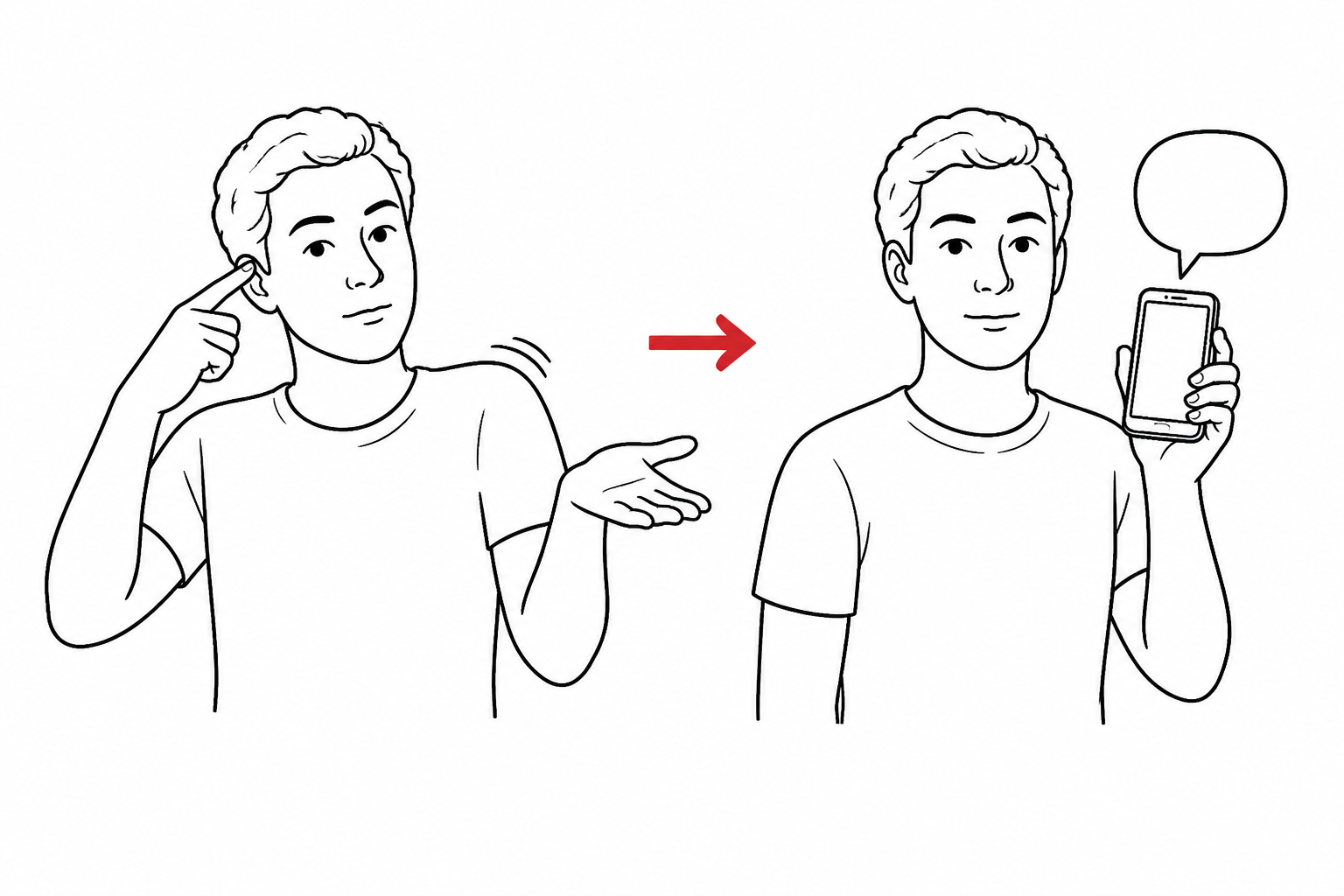
Two-panel line drawing: left panel shows a person pointing to their ear while shrugging the other shoulder; right panel shows the same person holding up a smartphone with a chat bubble. A red arrow connects the two panels.

Ten signs to know

Illustrations follow the standard ASL-dictionary style (line drawing + red motion arrows). They're a memory aid, not a substitute for watching a Deaf signer. Confirm every sign on signingsavvy before you use it.

Show all signs as: currently drawing

All signs are showing line drawings.
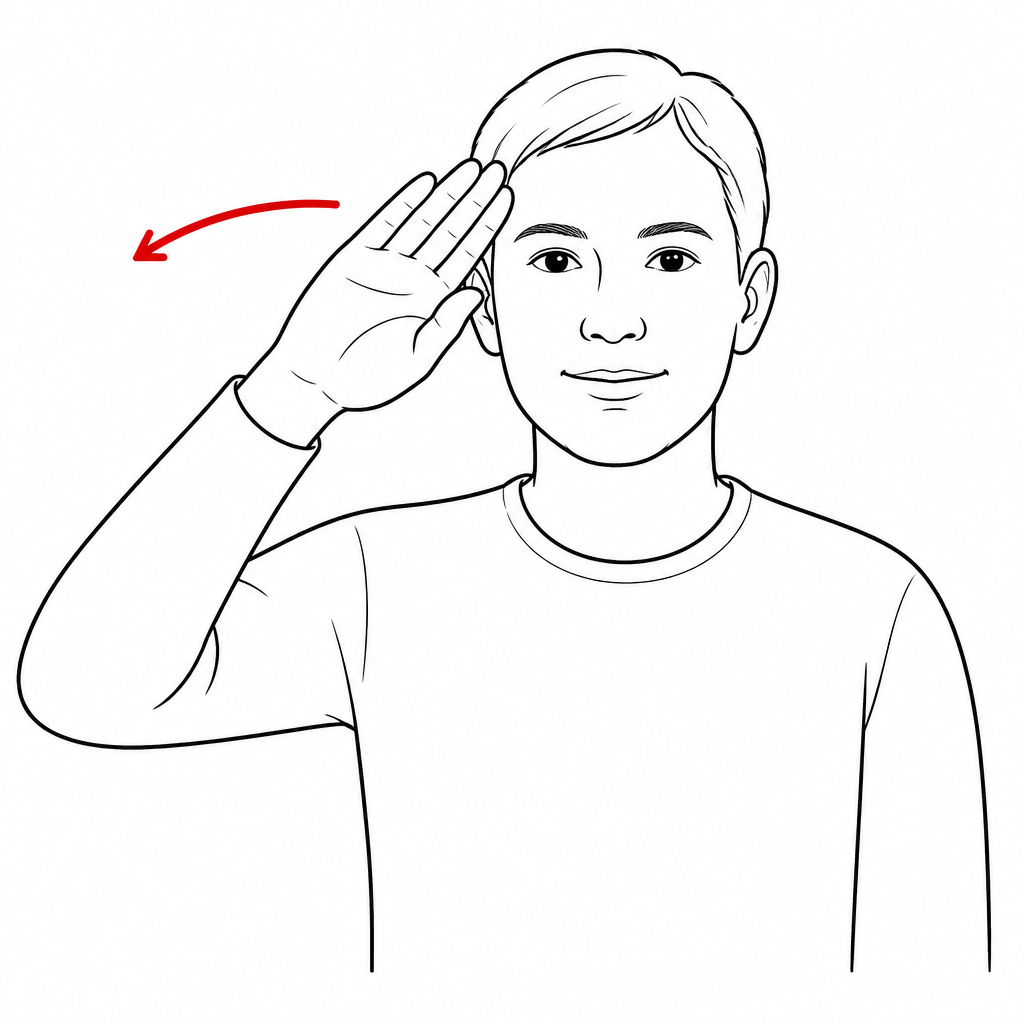
Line drawing of the ASL sign 'Hello': flat hand at the forehead moving outward with a red motion arrow.

Sign 1: Hello

Open flat hand at your forehead, like a casual salute, then move it outward.
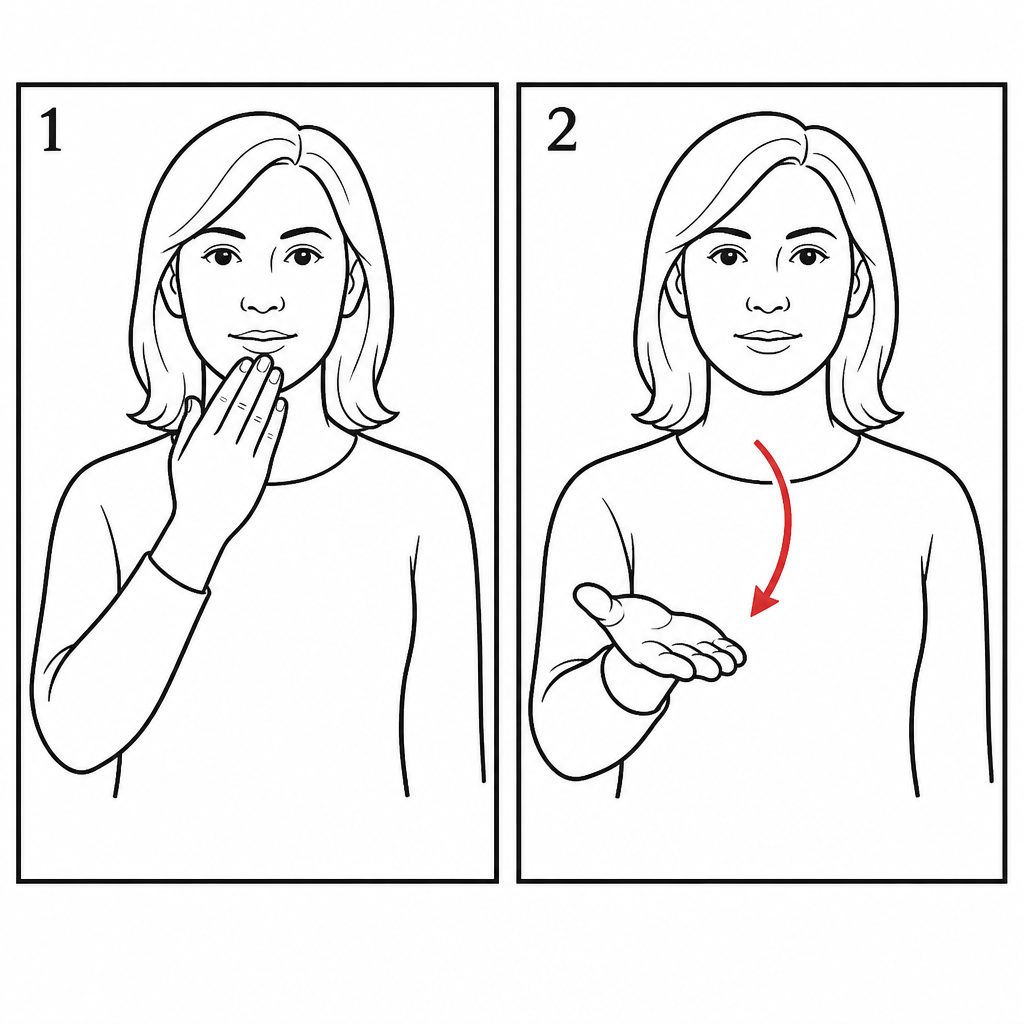
Line drawing of the ASL sign 'Thank you': flat hand at the chin moving forward with a red motion arrow.

Sign 2: Thank you

Flat hand touches your chin, then moves forward toward the person — like blowing a kiss of gratitude.
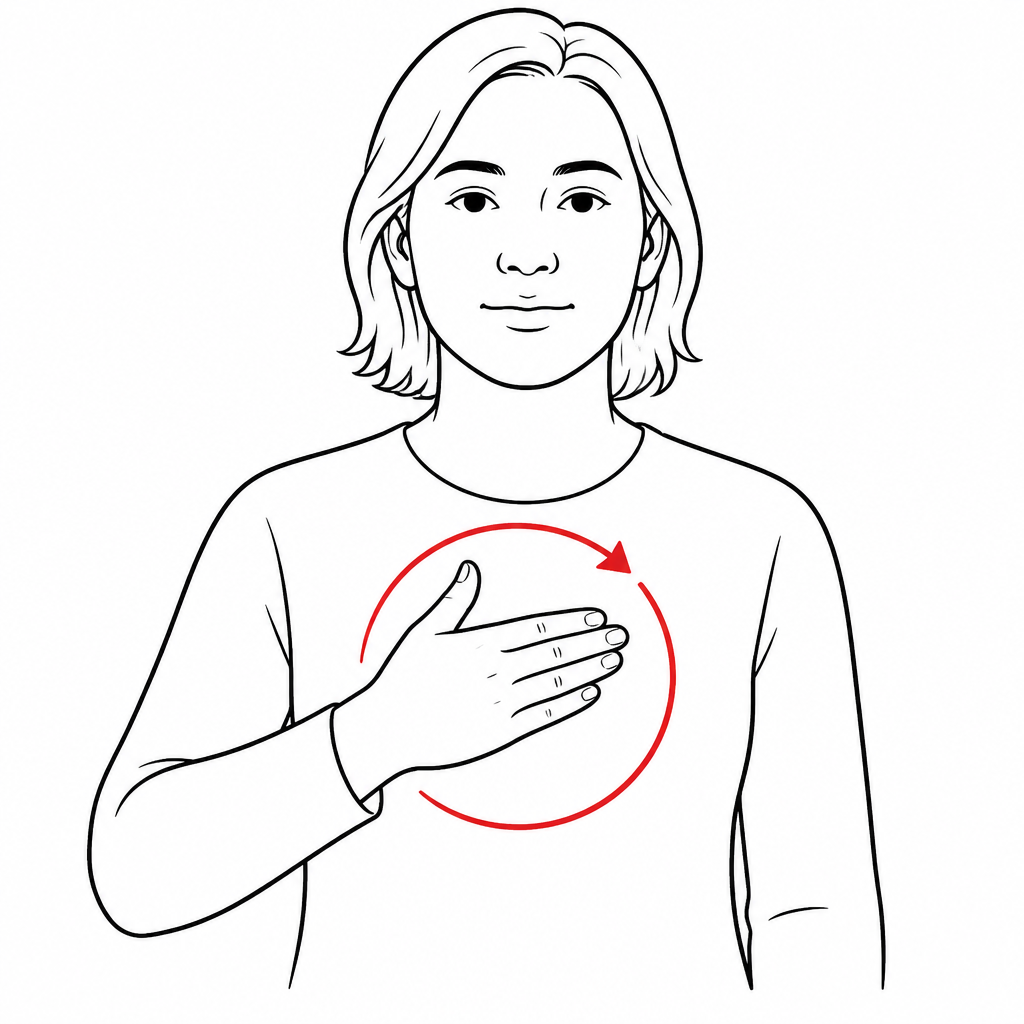
Line drawing of the ASL sign 'Please': flat hand circling on the chest with a red motion arrow.

Sign 3: Please

Flat hand on your chest, circle it a few times.
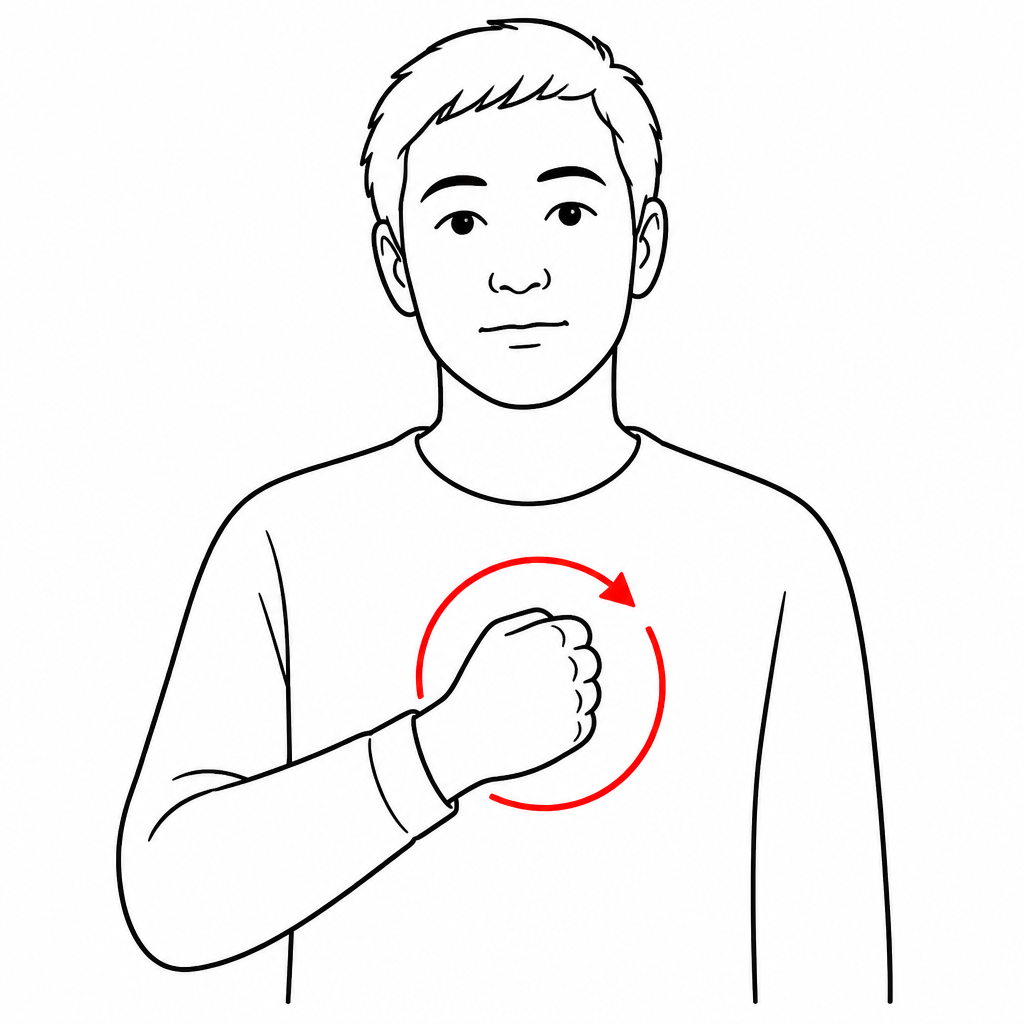
Line drawing of the ASL sign 'Sorry': fist rubbing the chest in a small circle with a red motion arrow.

Sign 4: Sorry

Make a fist, rub it in a small circle over your chest.

Same sign means 'I'm sorry' or 'excuse me'.
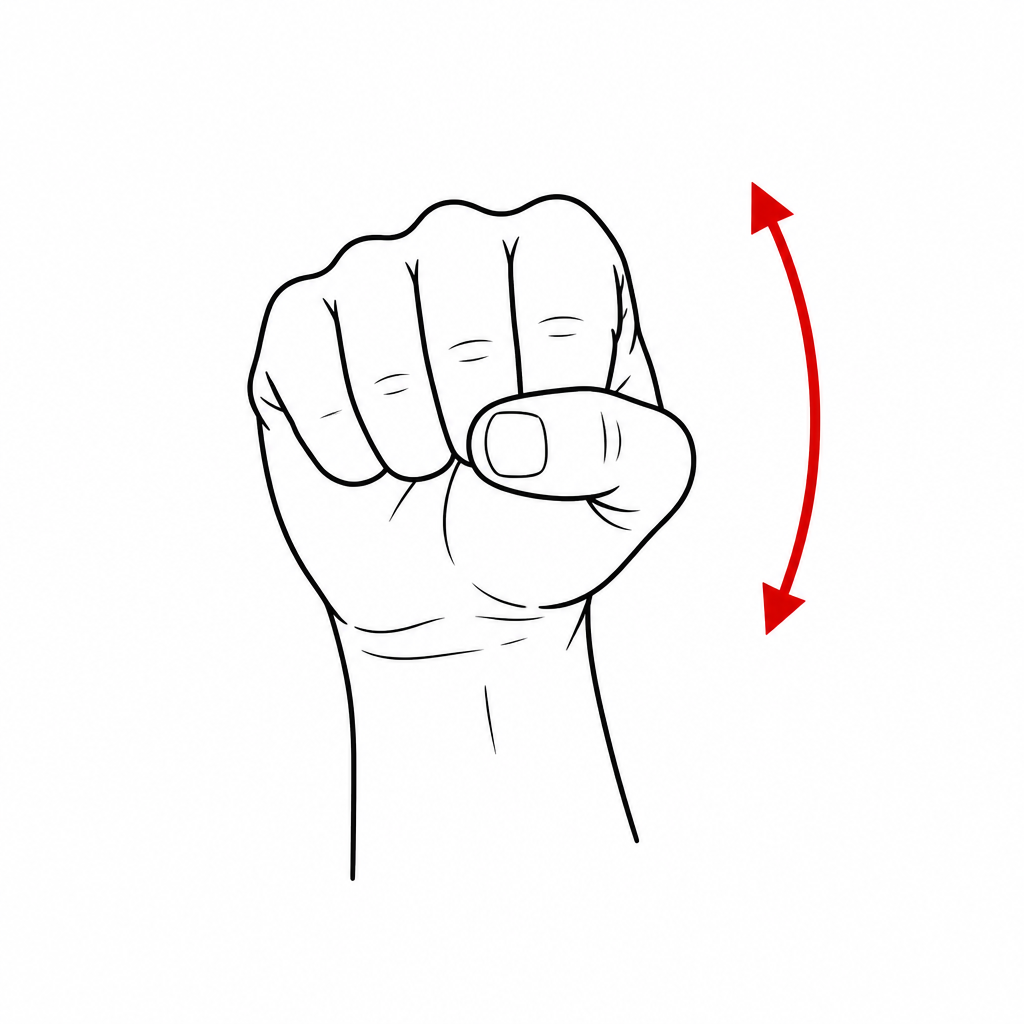
Line drawing of the ASL sign 'Yes': fist nodding up and down with a red motion arrow.

Sign 5: Yes

Make a fist and nod it up and down — like a head nodding.
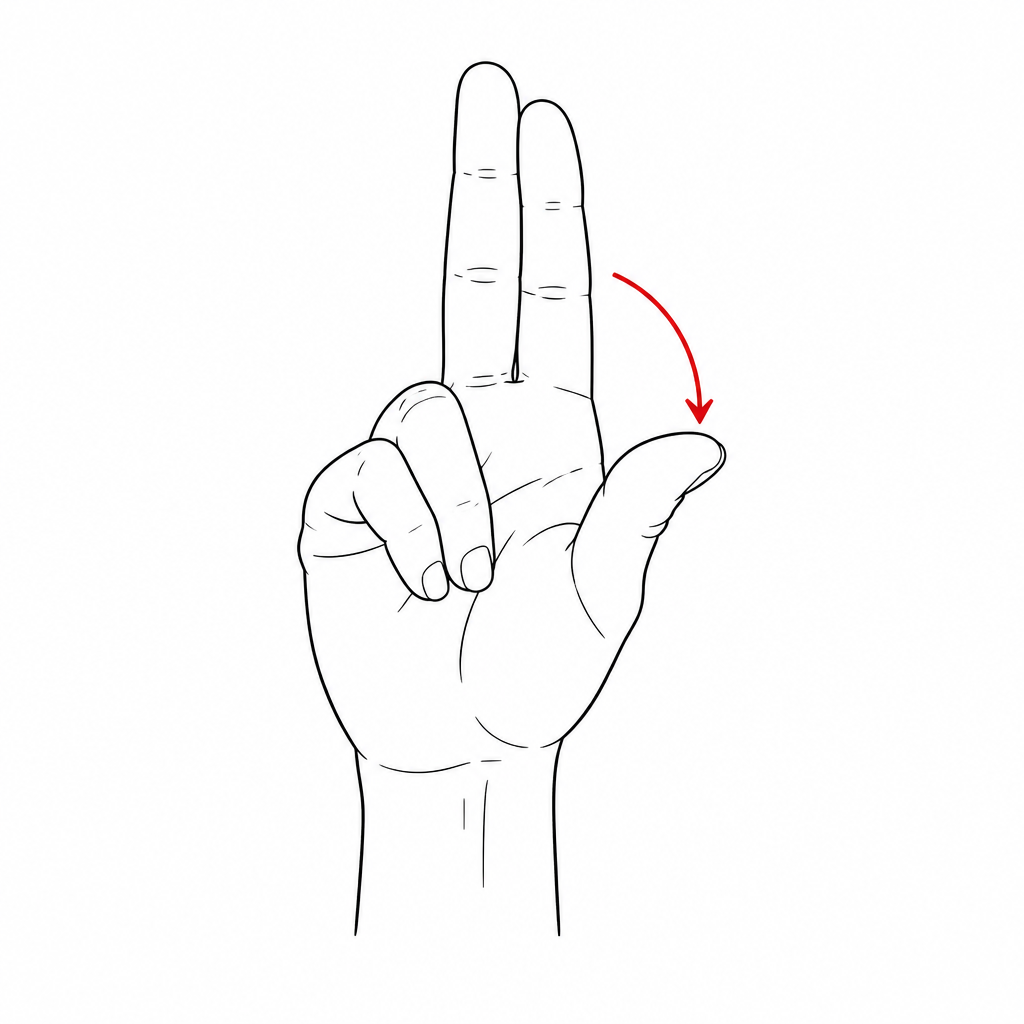
Line drawing of the ASL sign 'No': index and middle finger tapping the thumb closed with a red motion arrow.

Sign 6: No

Index + middle finger tap your thumb closed, once.
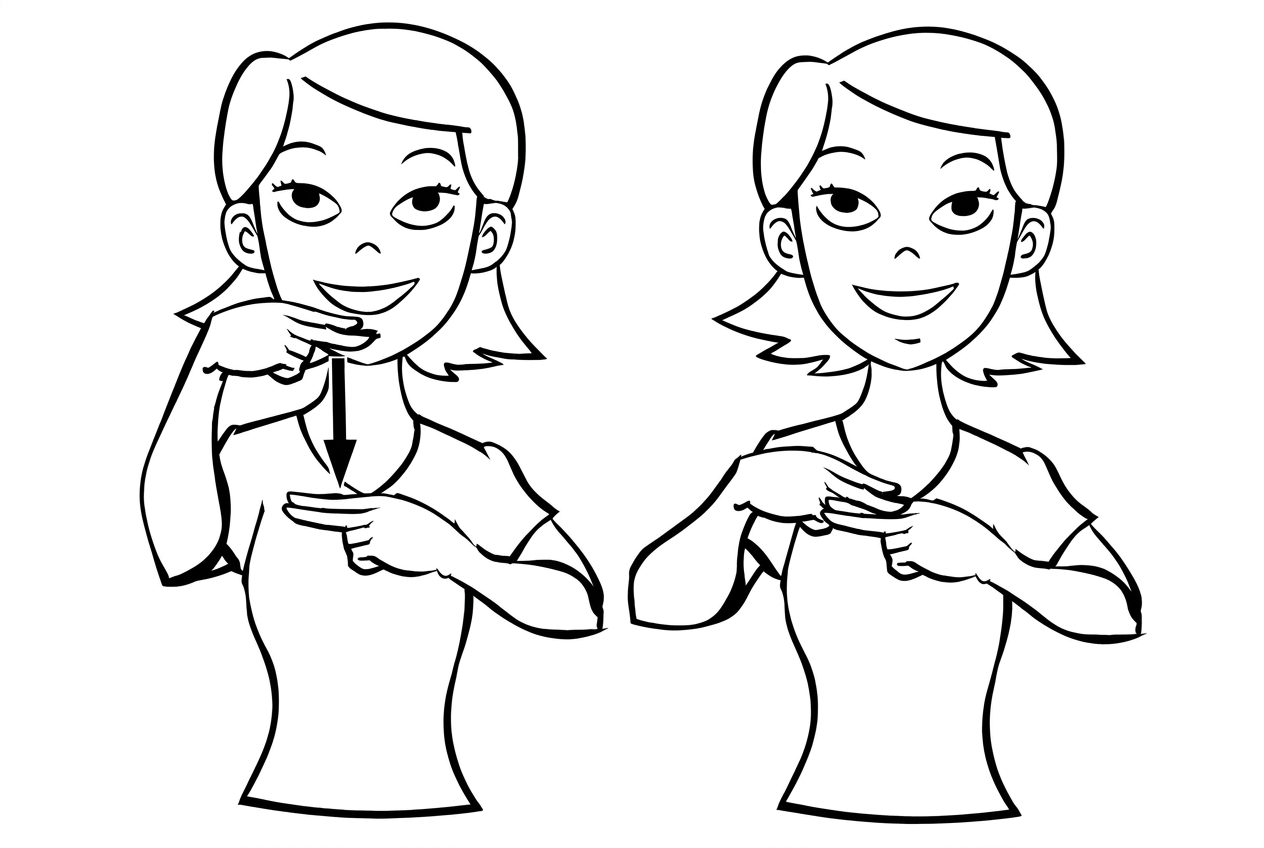
Line drawing of the ASL sign 'Name': two fingers of each hand crossing in an X with a red motion arrow.

Sign 7: Name

Two fingers (index + middle) of each hand tap together in an X, twice.
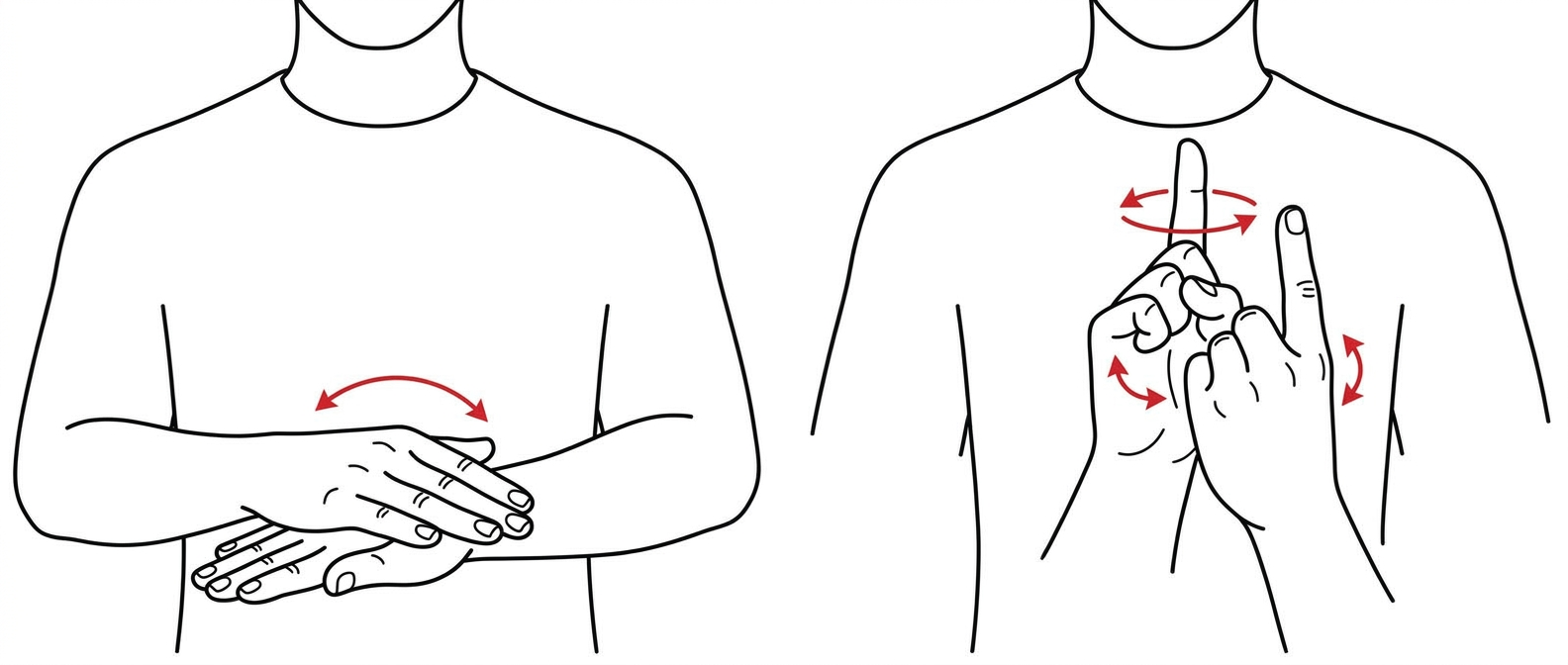
Line drawing of the ASL phrase 'Nice to meet you': flat hand sliding across the other palm, then two index fingers meeting, with red motion arrows.

Sign 8: Nice to meet you

"Nice": flat hand slides across your other flat palm. "Meet": two upright index fingers come together. "You": point.
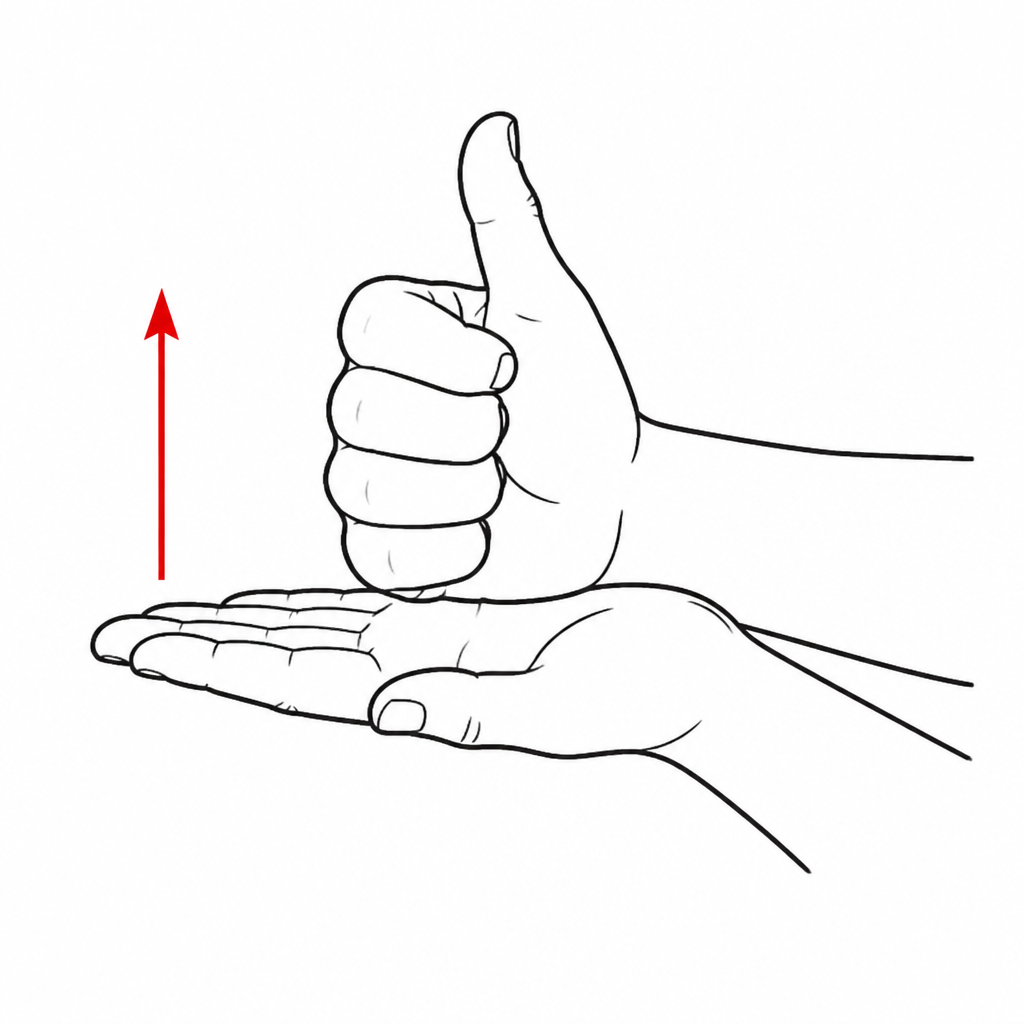
Line drawing of the ASL sign 'Help': thumb-up fist on flat palm being lifted together with a red motion arrow.

Sign 9: Help

Thumb-up fist resting on flat palm, lift both together.
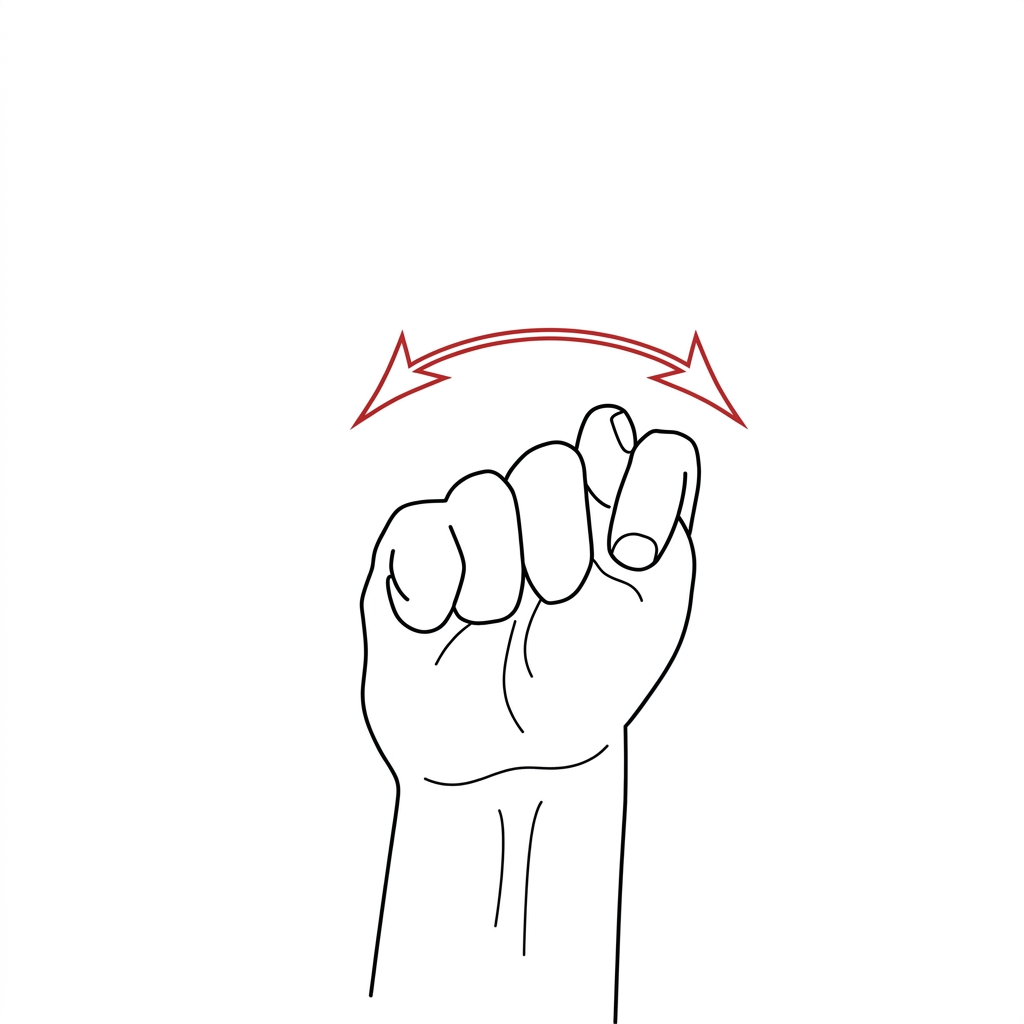
Line drawing of the ASL sign 'Bathroom': hand in a T handshape shaking side to side with a red motion arrow.

Sign 10: Bathroom

Make the letter T (thumb between index and middle), shake it side to side.

Watch demonstrations on signingsavvy — excellent free resources.

Fingerspelling

The ASL alphabet lets you spell out names, technical words, and anything you don't yet know the sign for. Print a chart and tape it to your laptop — Lifeprint's printable chart is a great one.

  • Hold your hand up at shoulder height, palm facing the person.
  • Pause briefly between letters; longer pauses between words.
  • Don't worry about speed — clarity beats speed every time.
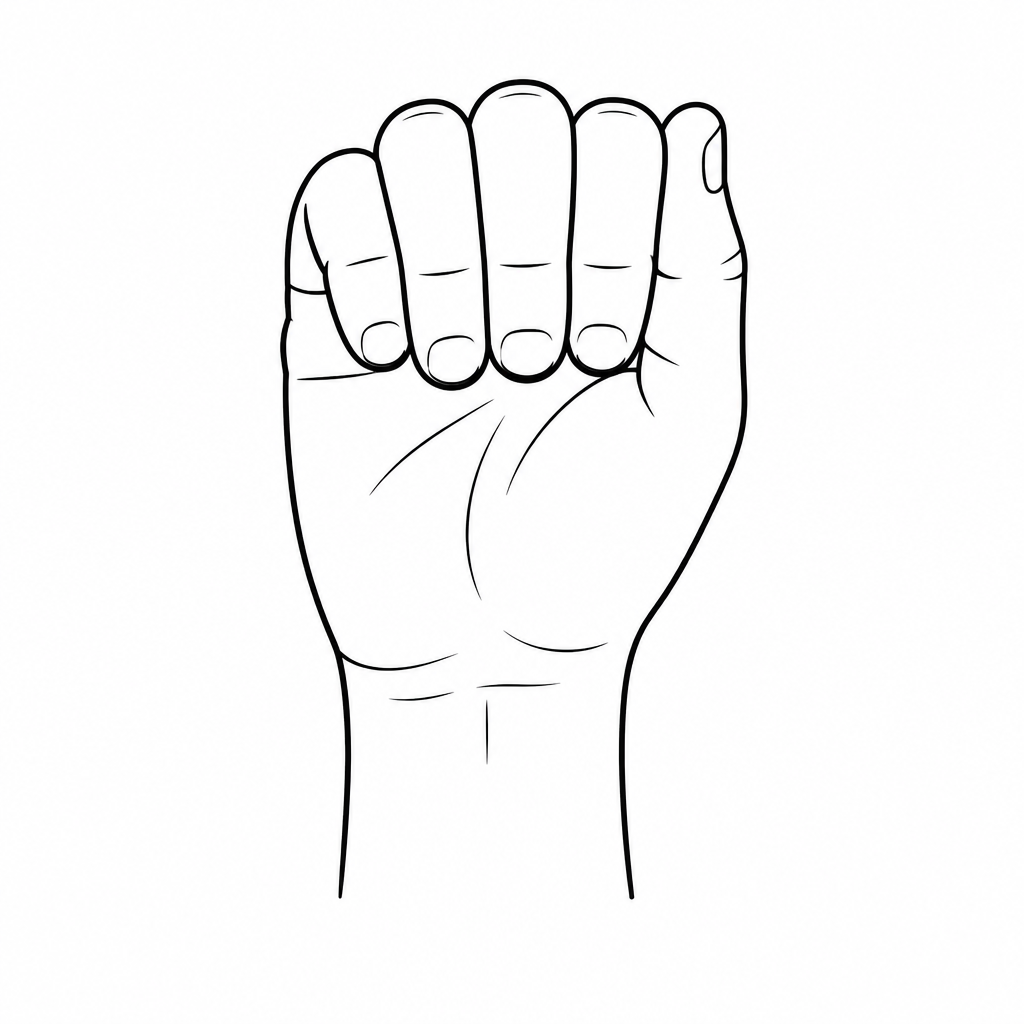
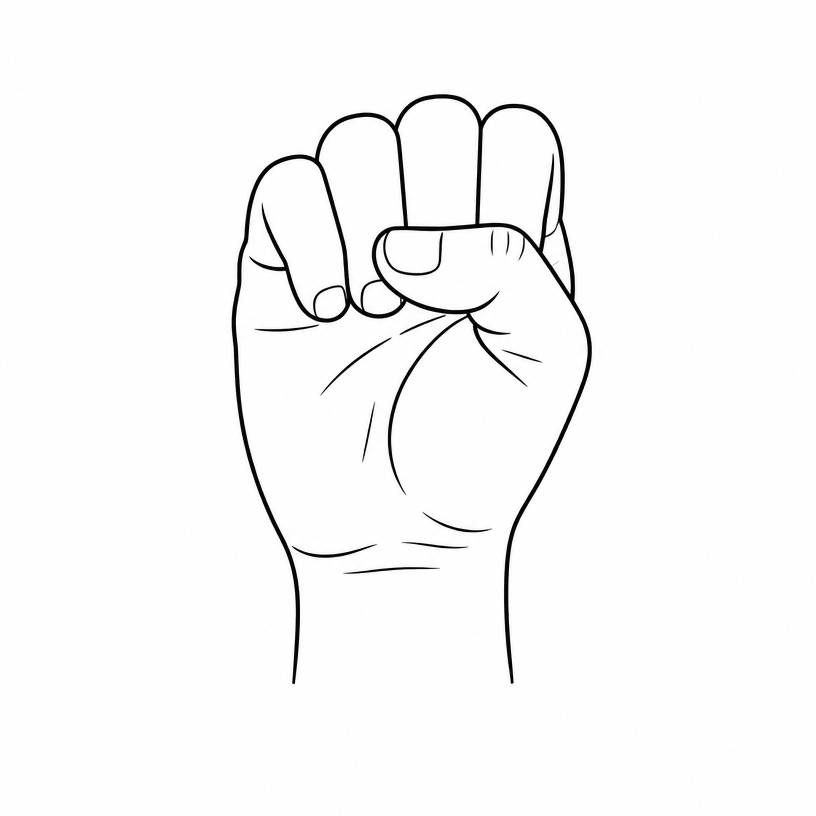
Line drawing of a single right hand held upright with fingers curled into a fist, demonstrating the general signing position used for fingerspelling — palm toward the viewer, at shoulder height.

Hold at shoulder height, palm out.

The alphabet, A to Z

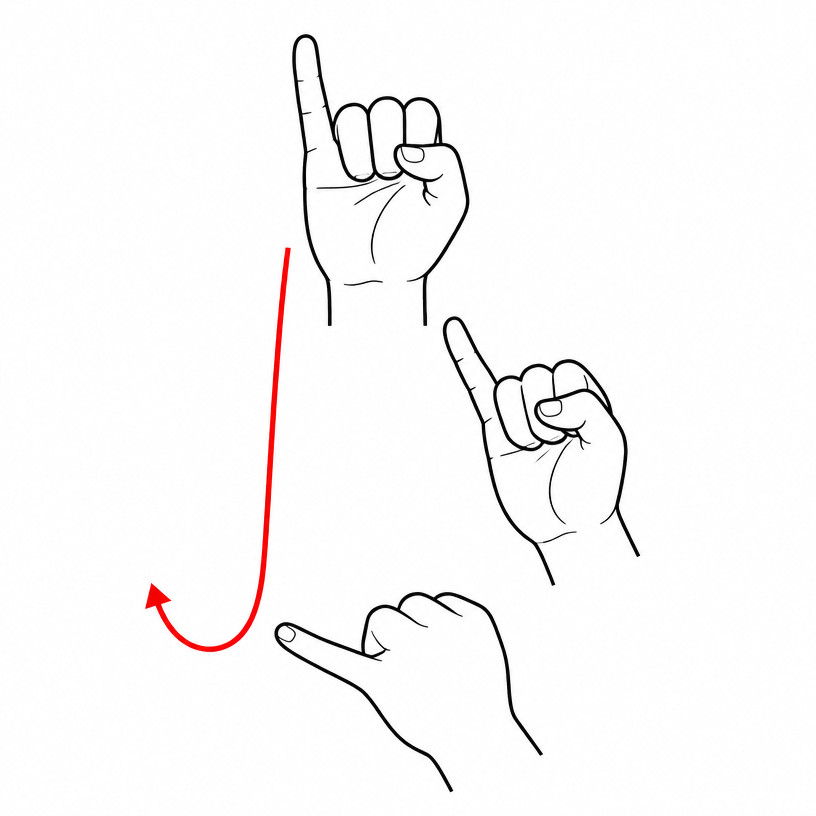
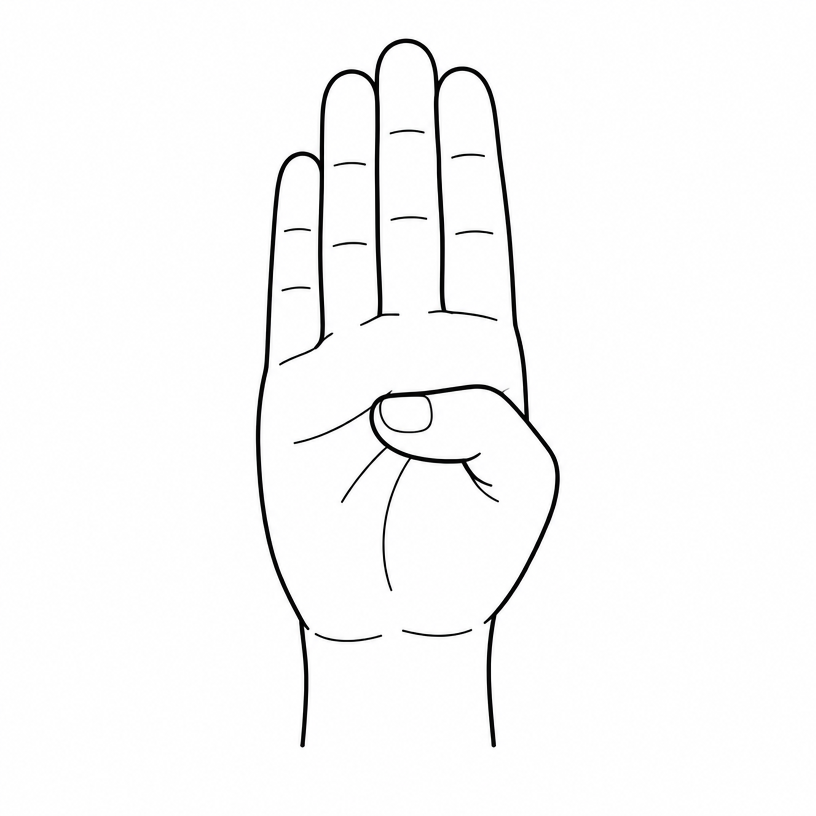
Scroll horizontally to see each letter. J and Z include a red motion arrow because they're the only two letters that move.
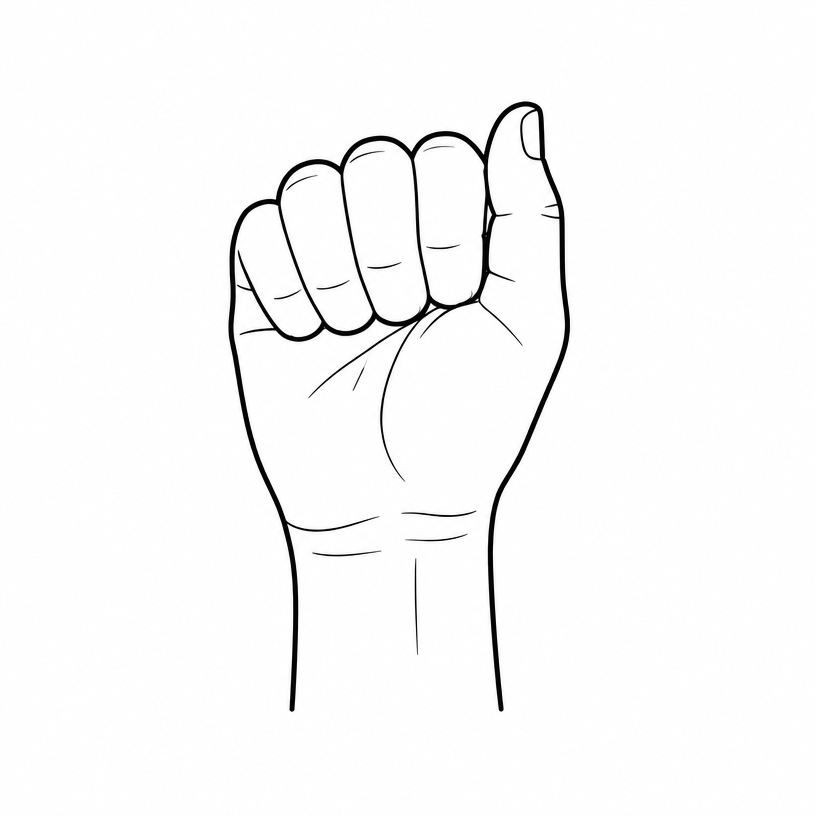
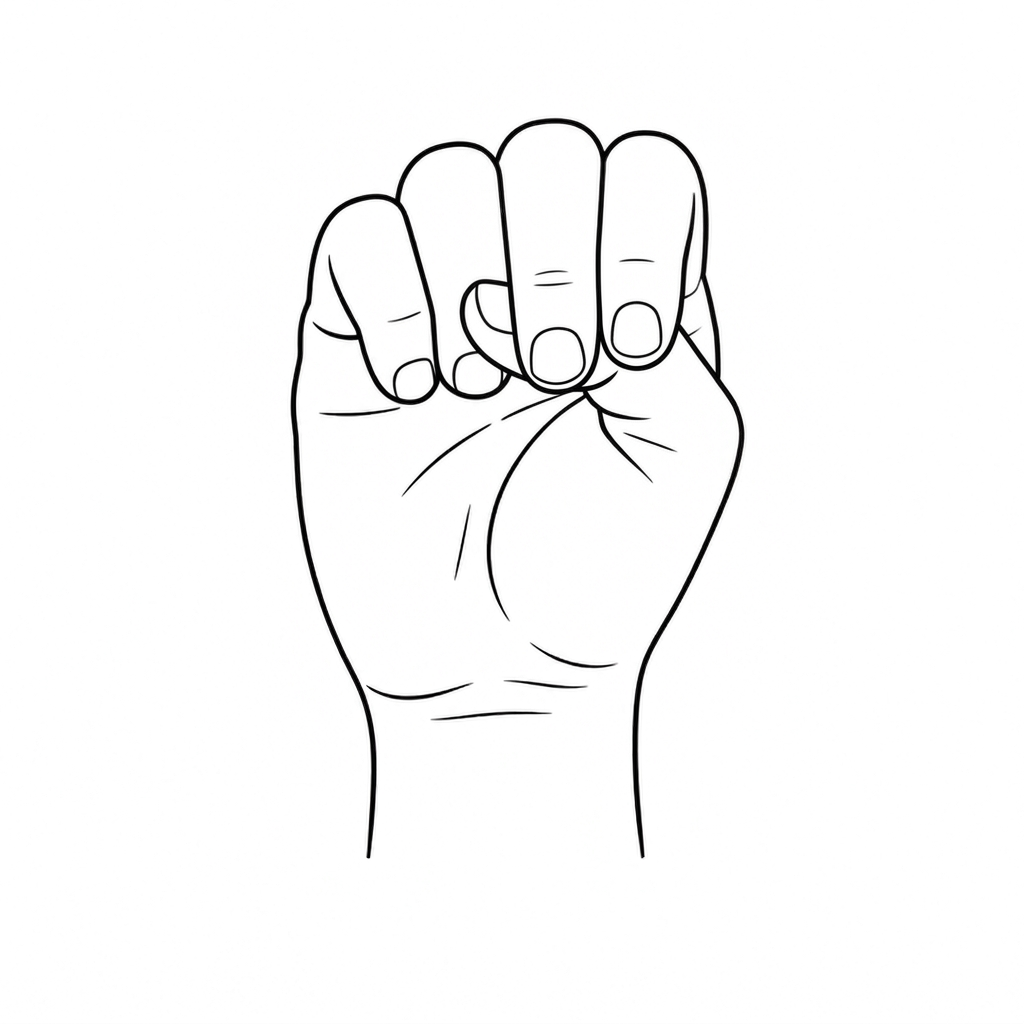
  • ASL letter A: closed fist with thumb resting alongside the index finger, palm facing viewer.
  • ASL letter B: flat open hand, four fingers straight up and together, thumb folded across the palm.
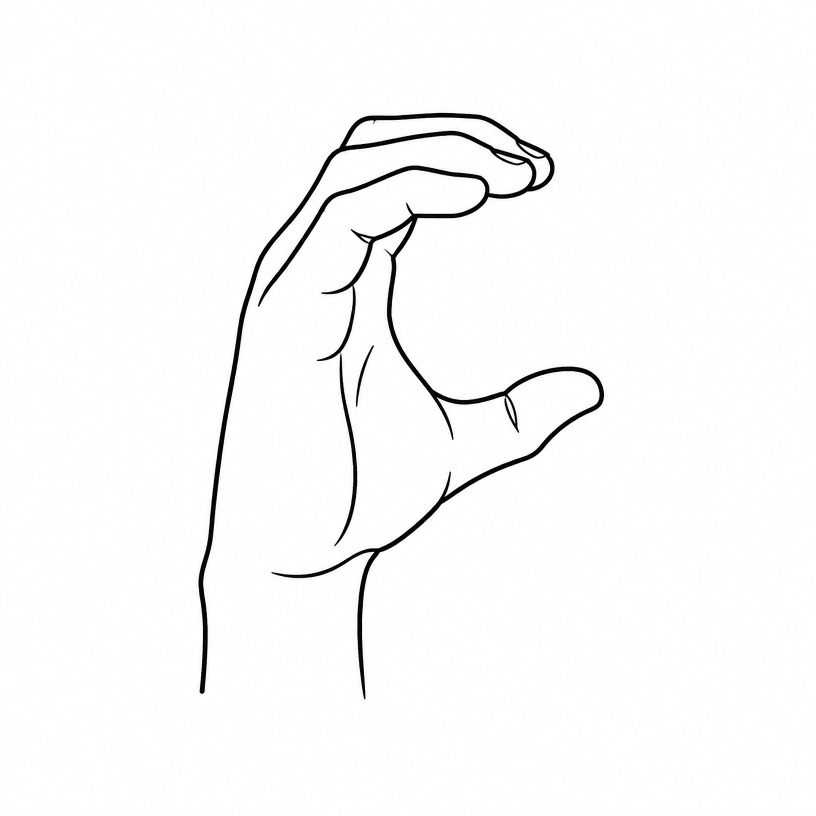
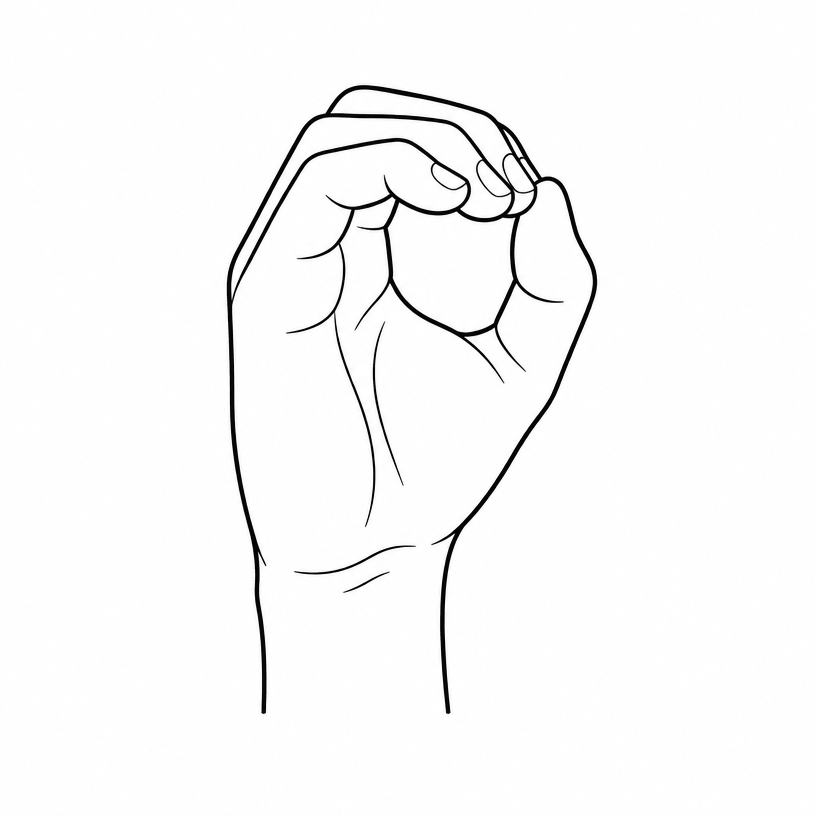
  • ASL letter C: fingers and thumb curved to form the shape of the letter C.
  • ASL letter D: index finger pointing up, other three fingers touching the thumb tip in a circle.
  • ASL letter E: fingers curled down with fingertips touching a horizontally tucked thumb.
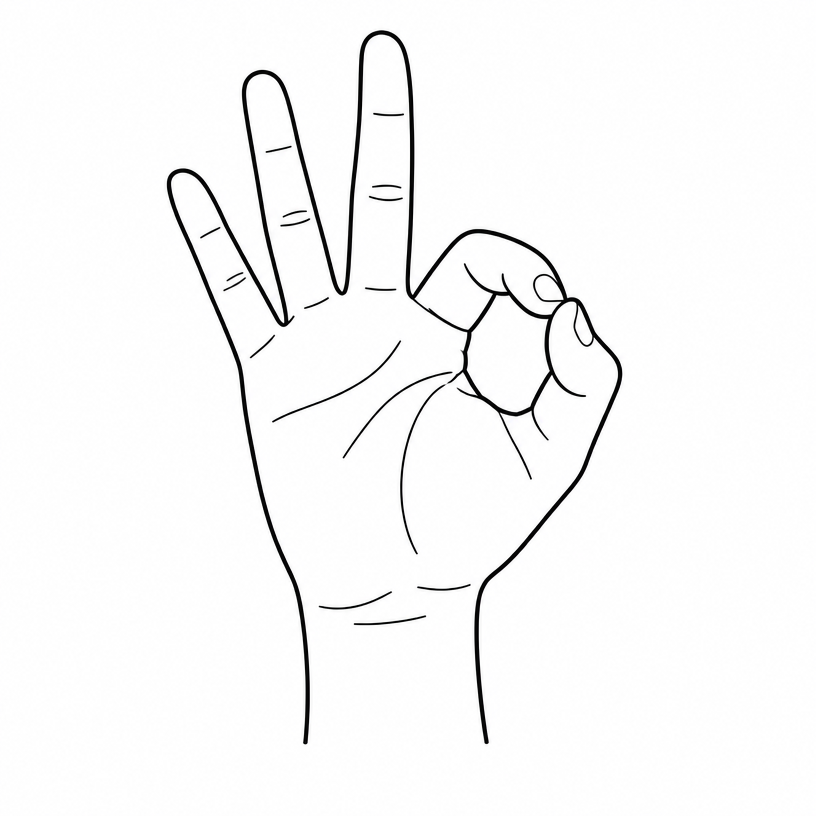
  • ASL letter F: thumb and index finger touching in a circle, other three fingers extended up.
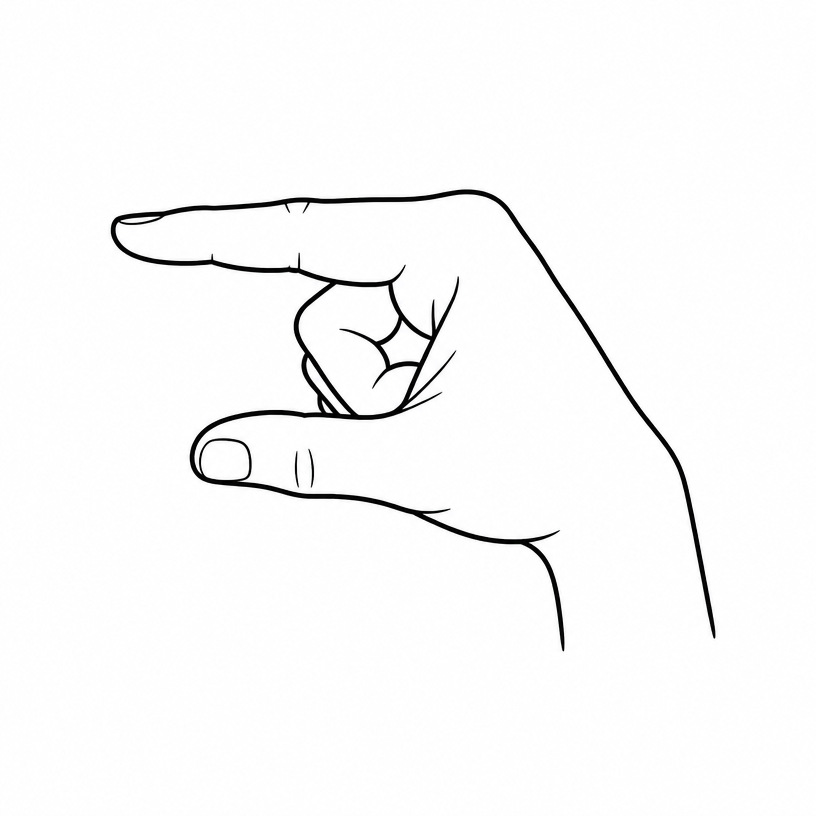
  • ASL letter G: index finger and thumb extended parallel and horizontal, other fingers curled.
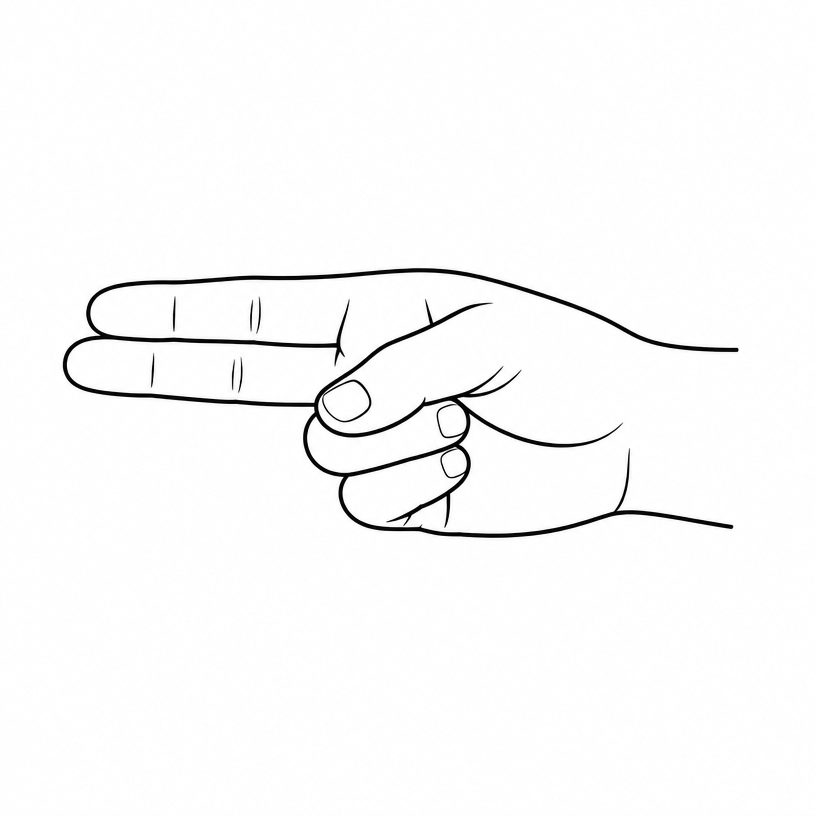
  • ASL letter H: index and middle fingers extended together horizontally, other fingers curled.
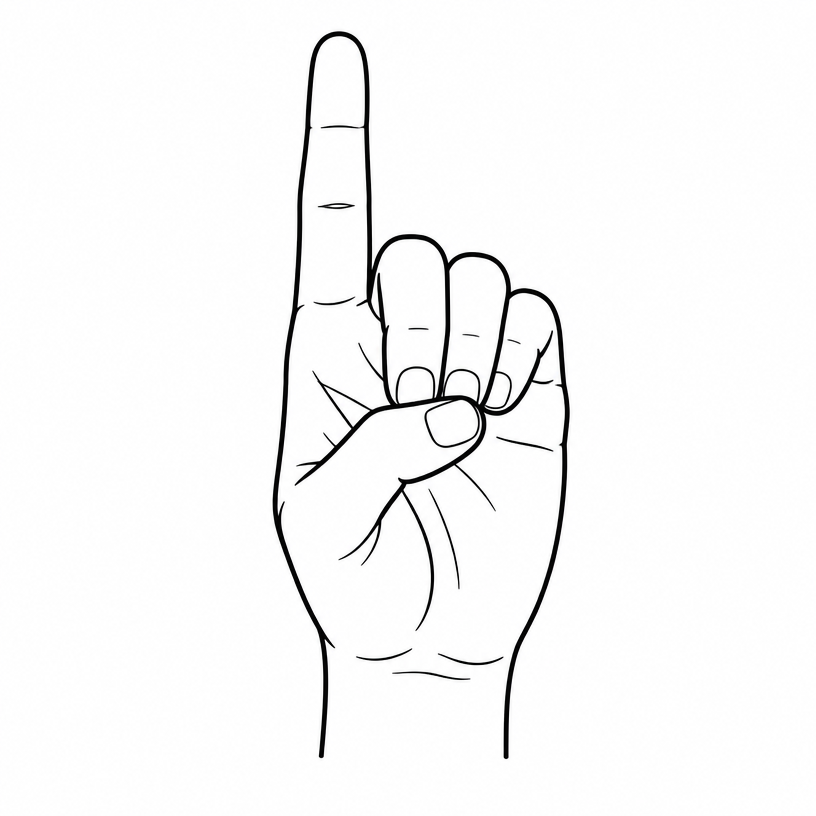
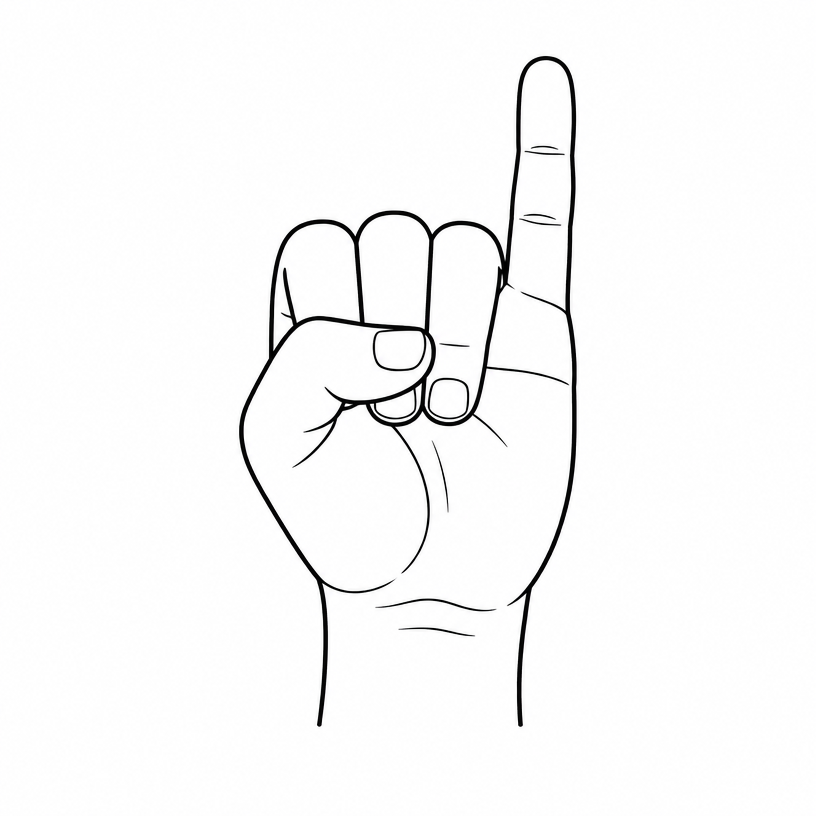
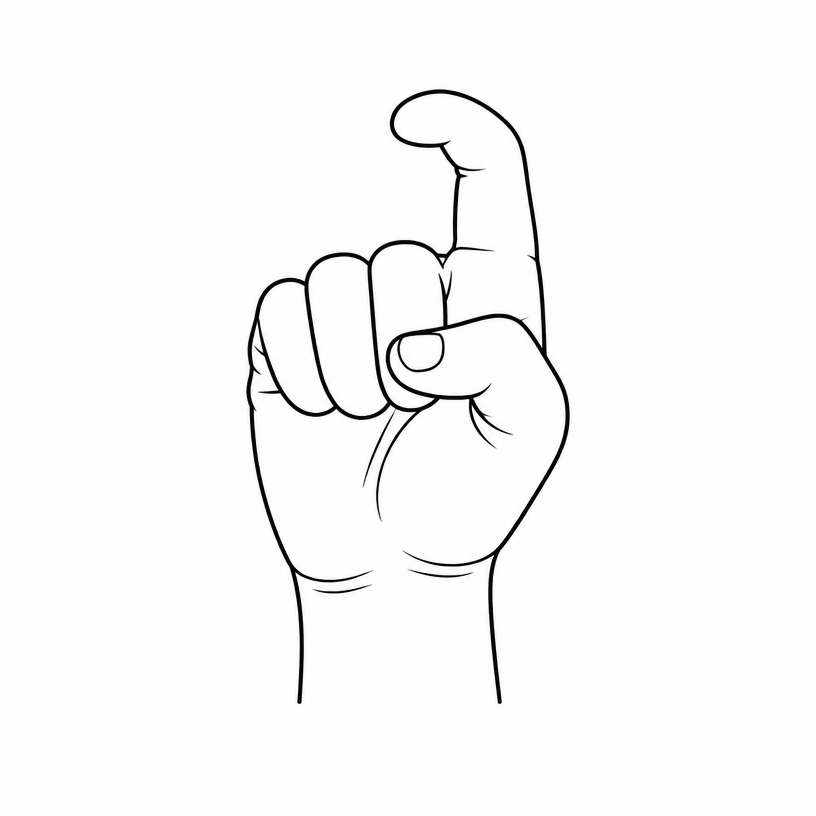
  • ASL letter I: closed fist with only the pinky finger extended straight up.
  • ASL letter J: pinky extended tracing the letter J in the air, shown with a red motion arrow.
  • ASL letter K: index finger up, middle finger angled out, thumb touching the base of the middle finger.
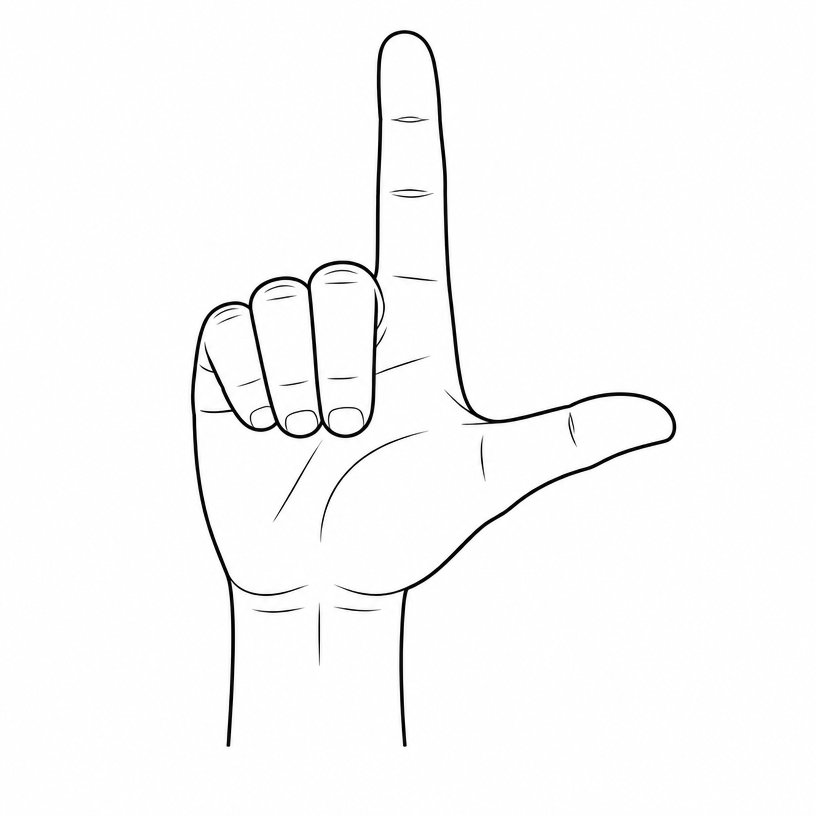
  • ASL letter L: index finger up and thumb extended out sideways, forming a clear L shape.
  • ASL letter M: three fingers (index, middle, ring) folded over a tucked thumb.
  • ASL letter N: two fingers (index and middle) folded over a tucked thumb.
  • ASL letter O: all fingers and thumb curved to form a round O shape.
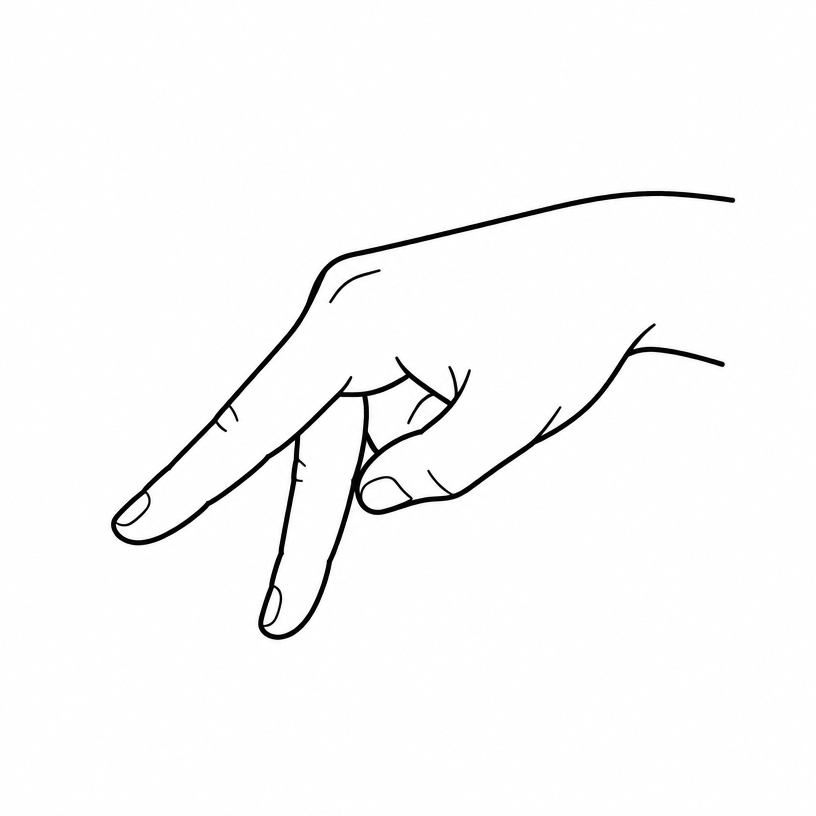
  • ASL letter P: K handshape rotated downward — index and middle fingers pointing down with thumb between them.
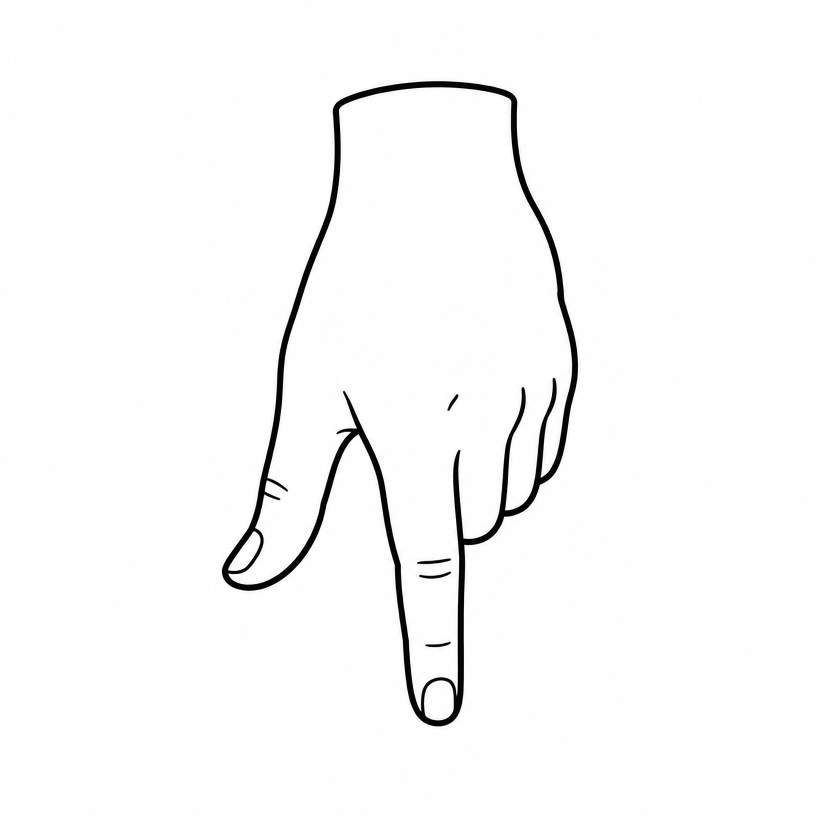
  • ASL letter Q: G handshape rotated downward — index finger and thumb parallel and pointing down.
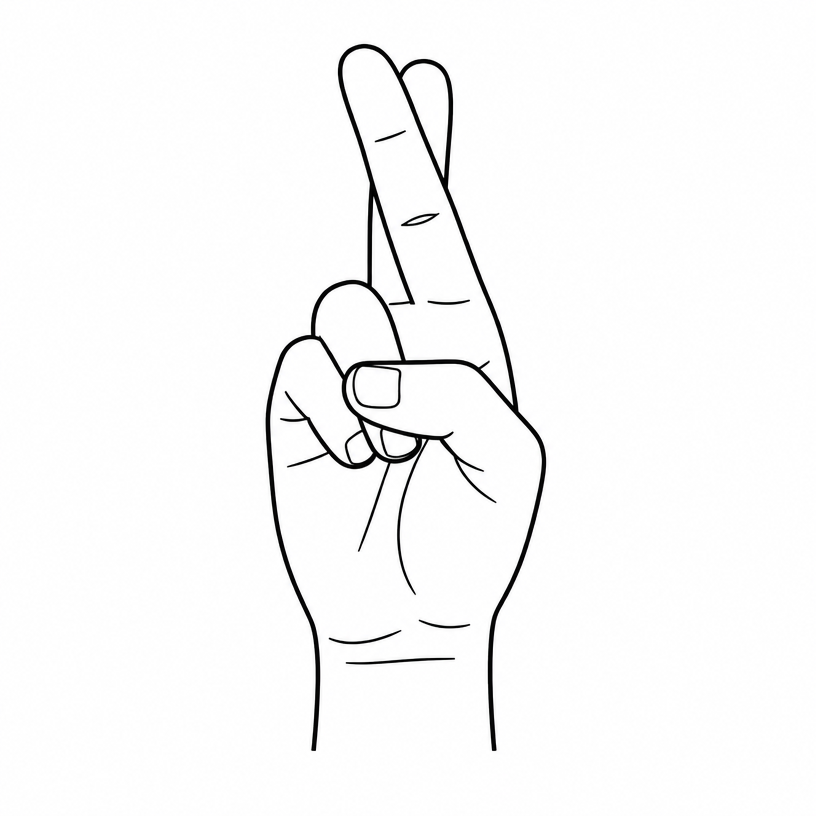
  • ASL letter R: index and middle fingers crossed and extended upward.
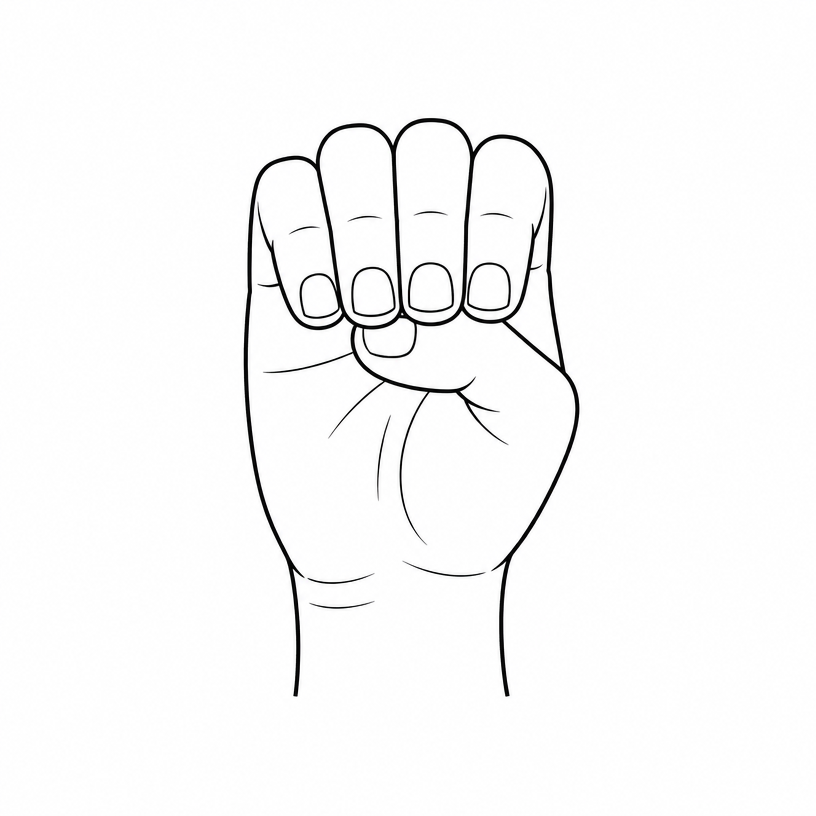
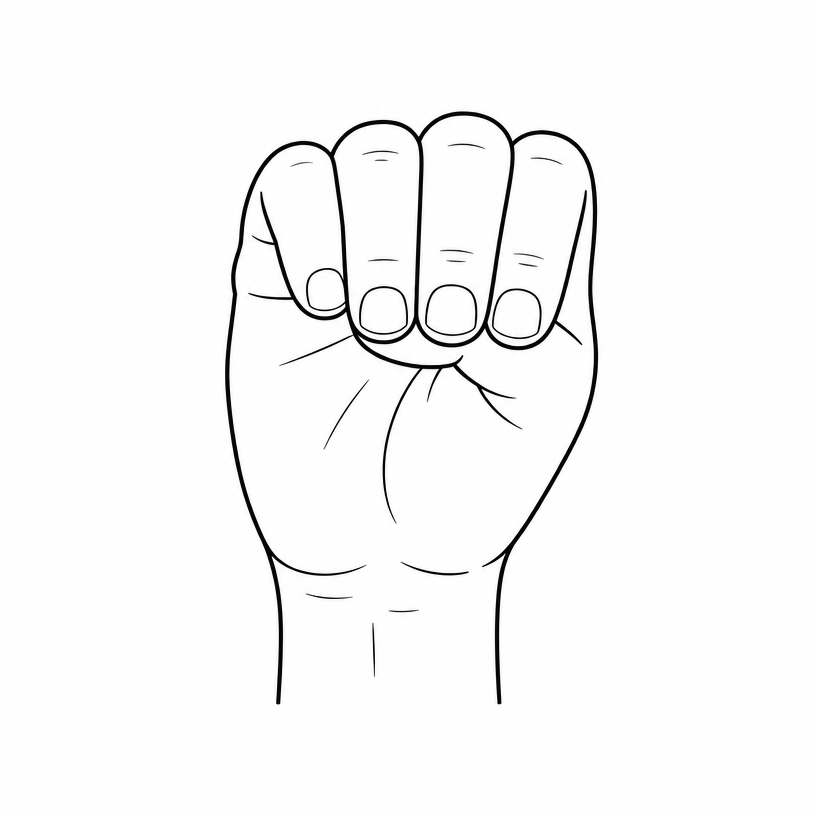
  • ASL letter S: closed fist with the thumb wrapped across the front of the folded fingers.
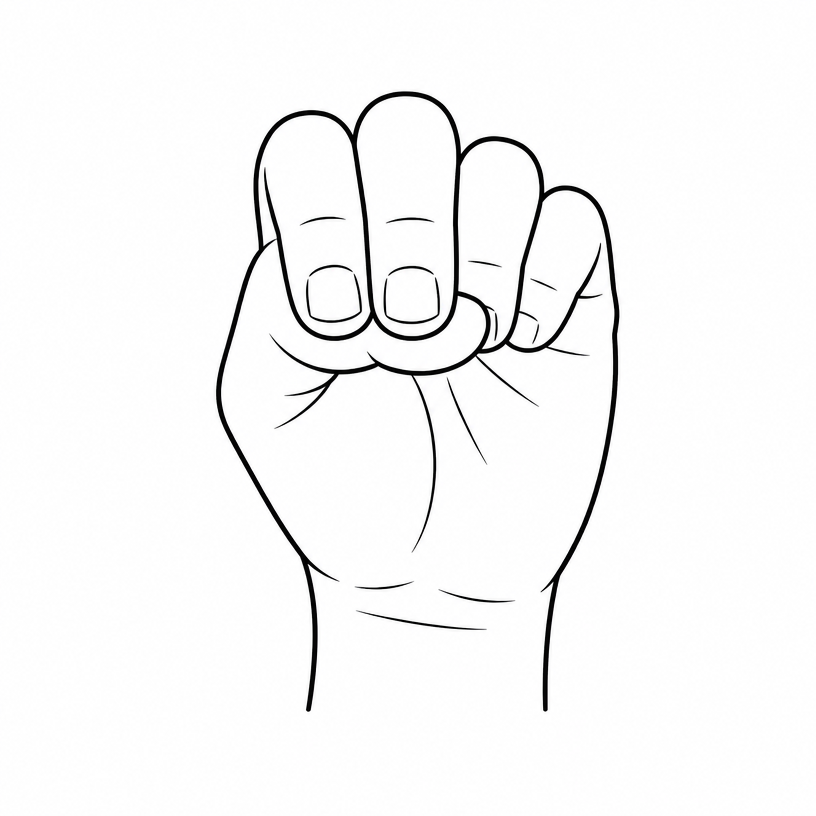
  • ASL letter T: closed fist with the thumb tip poking out between the index and middle fingers.
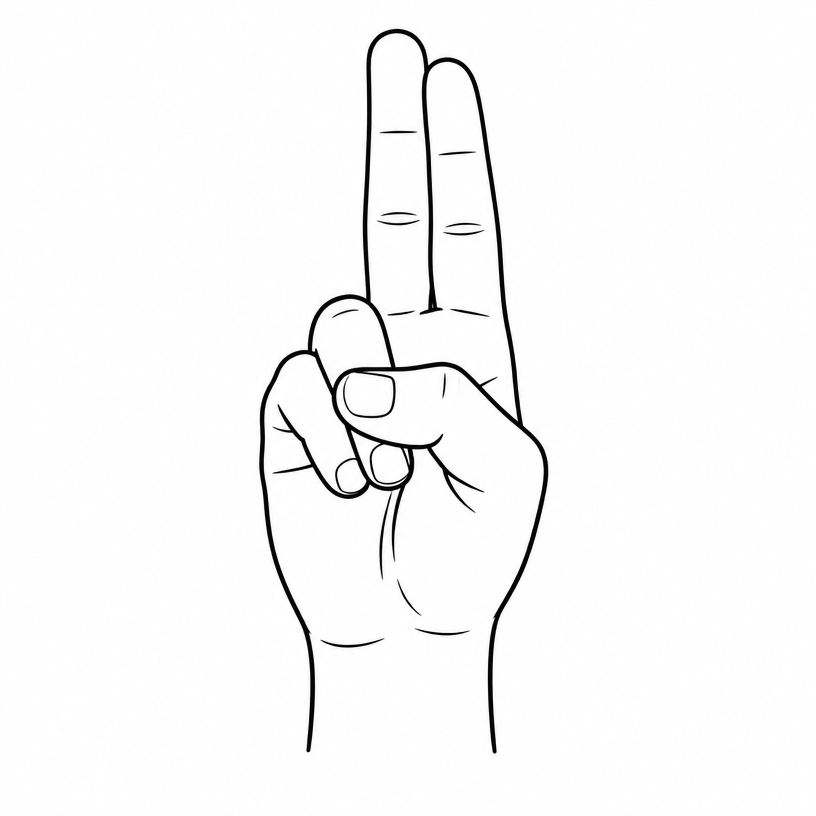
  • ASL letter U: index and middle fingers extended together and straight up.
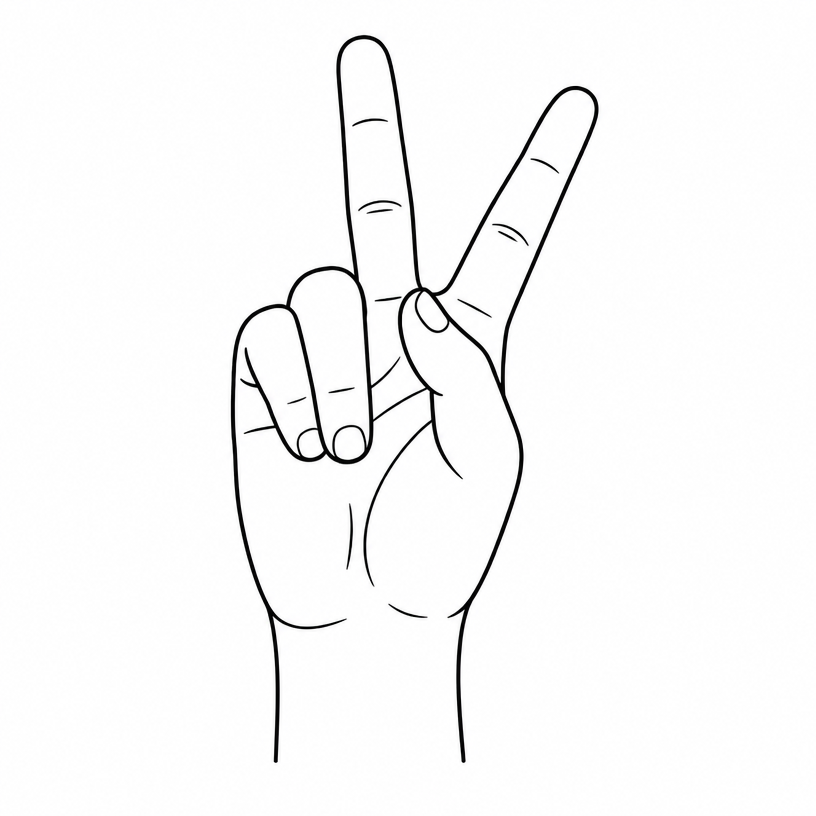
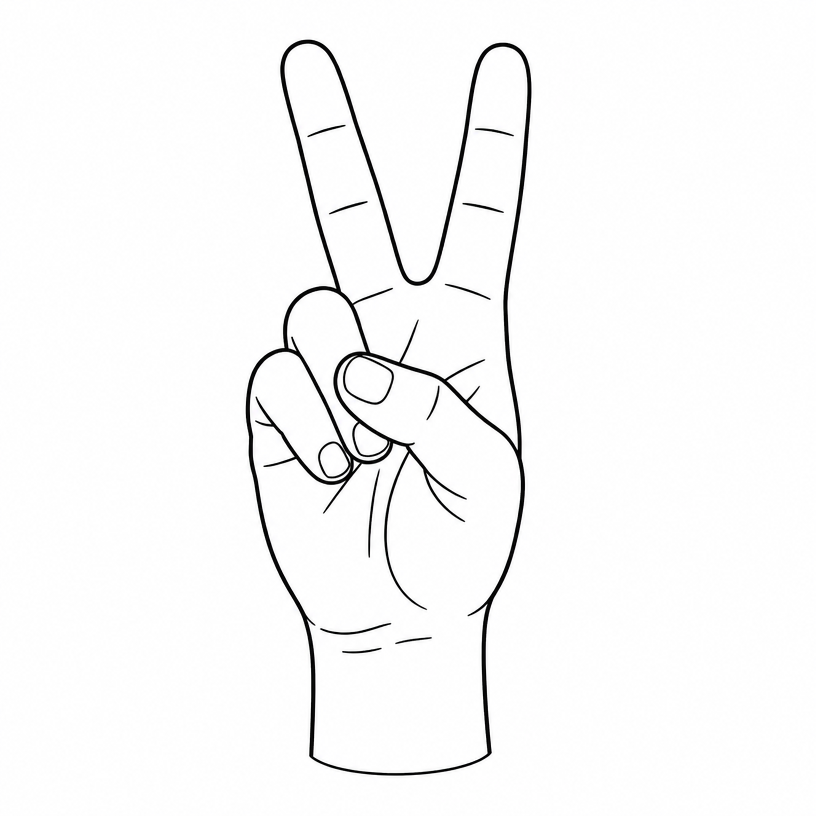
  • ASL letter V: index and middle fingers extended and spread apart in a V or peace-sign shape.
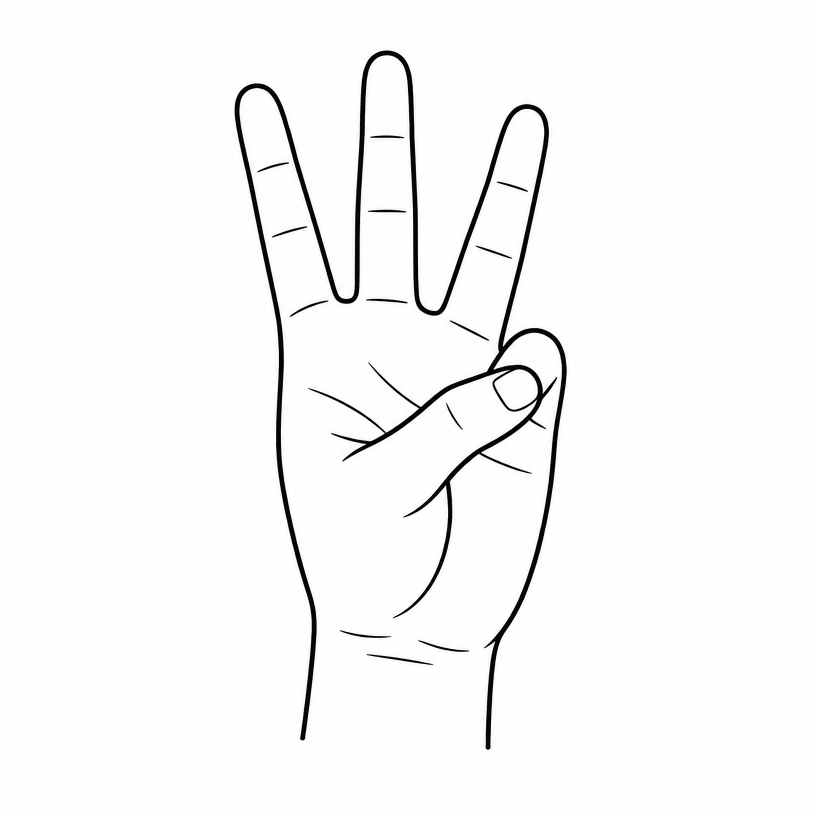
  • ASL letter W: three fingers (index, middle, ring) extended and spread; thumb holds the pinky down.
  • ASL letter X: closed fist with the index finger extended and hooked like a crook.
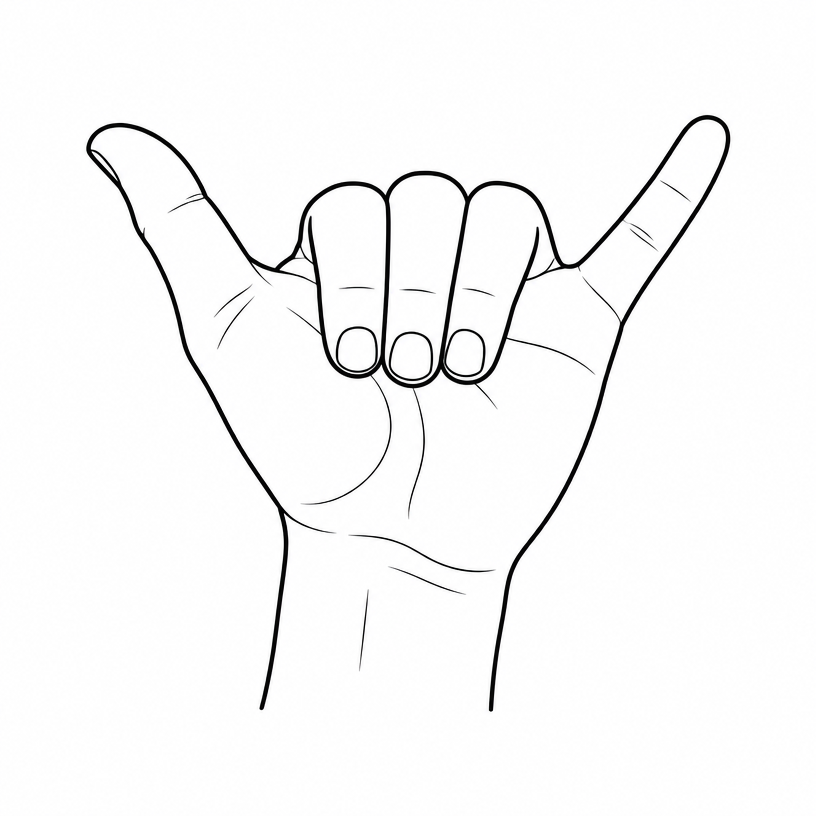
  • ASL letter Y: thumb and pinky extended out wide, other fingers curled into the palm.
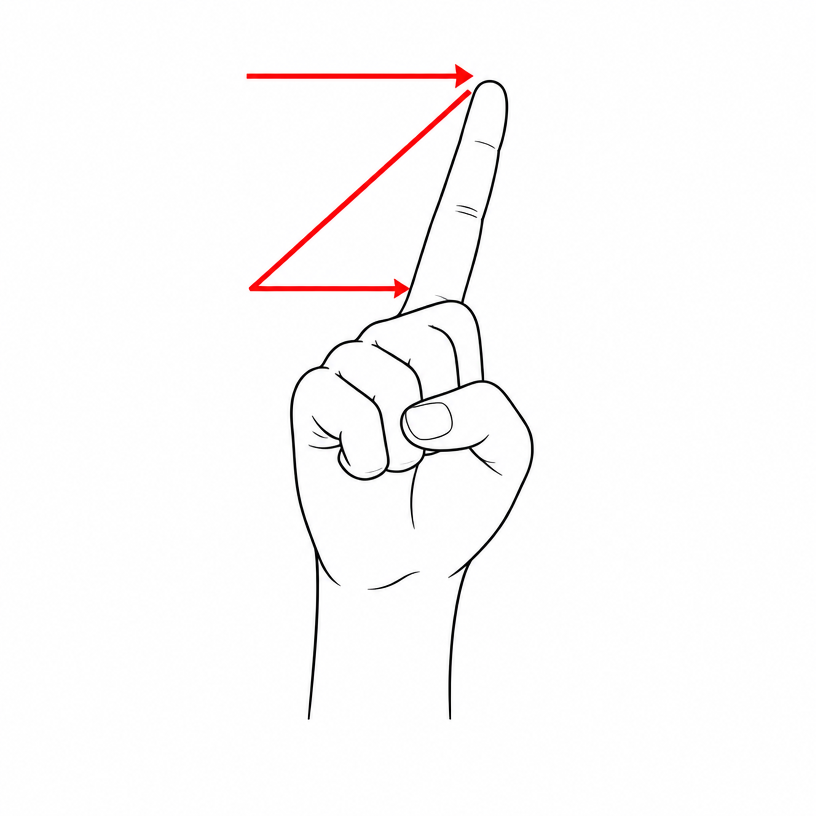
  • ASL letter Z: index finger tracing the letter Z in the air, shown with a red zig-zag motion arrow.

Quick etiquette while signing or watching

Get attention politely

Wave in their visual field, tap a shoulder, or flick a light. Don't throw anything.

Keep your hands & face visible

Don't sign while chewing, behind a laptop, or in a dim corner. Facial expression is grammar.

ASL ≠ English

ASL has its own word order, idioms, and culture. It is not "English on the hands."

Sign languages vary

ASL is American. BSL (Britain), Auslan, LSF, and many more exist. Even fingerspelling differs.